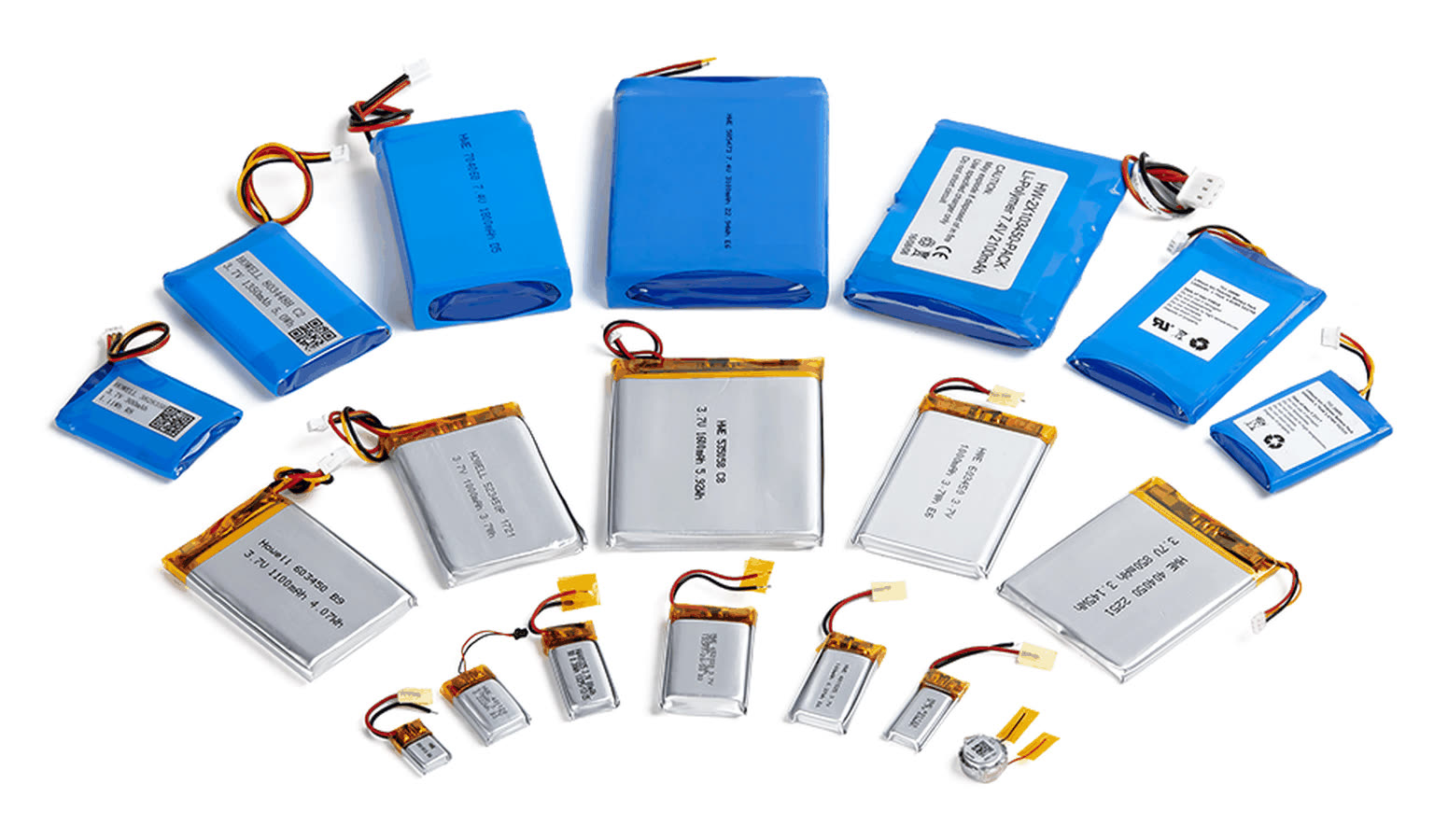
SHENZHEN, GUANGDONG, CHINA, October 25, 2026 /EINPresswire.com/ — Modern wearable tech and compact smart devices achieve ergonomic, lightweight designs through dedicated ultra-thin power sources. Hardware engineers prioritize compact form factors, high volumetric energy density, and proven pouch cell safety. Drawing on dedicated polymer battery manufacturing established at its Dongguan base since 2003, Howell Energy Co., Ltd. produces precision rechargeable LiPo polymer battery cells with thicknesses engineered down to 1.0mm. The company provides custom cell shaping and ultra-narrow width options for space-constrained electronics.
Engineering compact lithium polymer cells involves intricate coordination across electrochemistry, automated pouch sealing, and low-drain electronic protection. Evaluating advanced LiPo battery platforms requires analyzing four foundational engineering layers across cell chemistry, mechanical forming, and electrical integration:
Polymer Gel Electrolyte and Advanced Cathode Formulation: Semi-solid colloidal polymer matrices deliver volumetric energy densities exceeding 550 Wh/L.
Aluminum-Laminated Pouch Packaging and Ultra-Thin Forming: Multilayer pouch packaging achieves 1.0 mm to 2.0 mm ultra-thin form factors with tight hermetic sealing.
Low Self-Discharge Chemistry and Extended Standby Architecture: Advanced electrolyte additives maintain monthly self-discharge rates under 3 percent for multi-year storage.
Custom-Shaped Geometries and Integrated Protection Turnkey Delivery: Curved, round, and trapezoidal cell forming pairs with integrated protection circuit modules for turnkey OEM integration.
Polymer Gel Electrolyte and Advanced Cathode Formulation
The core engineering advantage of lithium polymer technology originates from its specialized semi-solid gel electrolyte matrix. Unlike traditional lithium-ion cells containing liquid organic electrolytes, LiPo cells utilize colloidal polymer matrices that immobilize active lithium salts. This quasi-solid formulation maintains high ionic conductivity while preventing free liquid movement within the electrode layers.
Howell Energy pairs this gel electrolyte with high-purity lithium cobalt oxide or nickel-cobalt-manganese cathode chemistries. High-density synthetic graphite anodes feature micro-porous surface coatings that promote smooth lithium-ion intercalation during rapid charge cycles. This balanced formulation achieves volumetric energy densities exceeding 550 watt-hours per liter.
The solid-state polymer structure delivers strong mechanical resistance against thermal expansion and internal short circuits. During continuous cyclic operation, the gel matrix maintains uniform pressure across active electrode interfaces. This mechanical stability mitigates localized impedance hot spots, maintaining stable discharge voltage plateaus across hundreds of operational cycles.
In addition, Howell Energy formulates high-rate discharge variants capable of continuous 3C to 5C discharge rates. These high-drain cells support micro motors, vibration haptics, and fast data processing in compact medical diagnostic tools and miniature robotics.
Aluminum-Laminated Pouch Packaging and Ultra-Thin Forming
Miniature consumer devices require batteries with minimal outer packaging mass and ultra-thin physical profiles. Howell Energy replaces heavy metallic cans with multilayer aluminum-laminated pouch films. This flexible packaging material consists of an outer polyamide protective layer, a central aluminum moisture barrier, and an inner polypropylene heat-seal layer.
Automated high-precision tooling creates deep-drawn packaging cups while maintaining uniform wall thickness. Howell Energy engineers ultra-thin LiPo cells measuring between 1.0 mm and 2.0 mm in total thickness. These ultra-thin dimensions accommodate credit-card-sized asset trackers, smart identity badges, and low-profile medical monitoring patches. Standard and custom footprints span from micro-capacity 130mAh cells (measuring just 3.5 mm thick and 5 grams) up to high-capacity 4000mAh single-cell packages, matching specific enclosure volumes across compact wearables and larger handheld devices.
Precision vacuum heat-sealing machines join pouch edges under tightly regulated temperature and pressure profiles. Secondary vacuum degassing stages extract residual reaction gases generated during cell formation. This dual-stage sealing process prevents edge delamination. The barrier maintains hermetic integrity across ambient operating environments from minus 20 to plus 60 degrees Celsius.
Ultrasonic tab welding stations bond high-purity nickel and copper-nickel terminal tabs with minimal contact resistance. Precision vision inspection systems measure seal widths within plus or minus 0.1 mm tolerances, verifying total pouch hermeticity before final electrical testing.
Low Self-Discharge Chemistry and Extended Standby Architecture
Compact environmental sensors and asset tracking devices spend prolonged intervals in low-power sleep states. In these applications, battery self-discharge rates directly dictate total operating lifetime. Standard lithium chemistries often suffer parasitic side reactions that drain capacity during long storage periods.
Howell Energy optimizes electrode purity and incorporates specialized functional electrolyte additives to suppress internal parasitic drain currents. The resulting LiPo cells maintain an ultra-low self-discharge rate of less than 3 percent per month at room temperature. This suppressed parasitic drain allows assembled hardware to endure over six months of static warehouse storage without supplementary maintenance charging or cell degradation. This minimal charge decay preserves usable energy over multi-year warehouse storage and extended field deployments.
For compact sensors and industrial tracking tags, low self-discharge pairs with high pulse discharge capabilities. Cells deliver immediate millisecond current bursts to power wireless transmissions via Bluetooth Low Energy, Zigbee, LoRa, or cellular NB-IoT modems. Following radio transmission, voltage levels recover smoothly without triggering low-voltage brownout thresholds.
Cells maintain over 80 percent capacity retention after 500 to 800 standard charge-discharge cycles. Even under continuous 45 degrees Celsius ambient storage, internal impedance growth remains strictly controlled, maintaining reliable performance across long product service lives.
Custom-Shaped Geometries and Integrated Protection Turnkey Delivery
Wearable devices frequently feature curved or irregular contours to match human ergonomic profiles. Standard rectangular battery cells leave unused spatial voids within curved housings. Howell Energy provides specialized custom tooling to produce diverse non-rectangular LiPo geometries.
Engineers manufacture curved cells for smart rings and wristbands, circular coin pouches for round smartwatches, and trapezoidal cells for smart eyewear frames. These customized cell profiles enhance internal space utilization, increasing device battery capacity by up to 30 percent compared to conventional rectangular layouts.
To accelerate client manufacturing, Howell Energy delivers turnkey battery subassemblies. Each unit includes a micro-sized Protection Circuit Module incorporating Seiko or Texas Instruments controller ICs. Engineers attach precision NTC thermistors, flexible printed circuit leads, and polarized micro-connectors, providing plug-and-play assembly for OEM production lines.
All custom configurations undergo rigorous electrical insulation, drop impact, and environmental chamber testing. Standard compliance testing supports international product approvals, including IEC 62133, UL 1642, CE, and UN 38.3 transport certifications.
Direct Factory Sourcing and Commercial Advantages
Direct factory sourcing from Howell Energy establishes four foundational operational advantages for international equipment manufacturers:
Broad Cell Dimension Matrix: Over 1000 existing tooling sets cover ultra-thin, high-rate, and custom-shaped LiPo pouch geometries.
Strict International Certification Readiness: Turnkey compliance testing supports global export markets under UL 1642, IEC 62133, CE, and UN 38.3.
Agile Prototyping and Fast Response: A flexible one-piece sample MOQ pairs with dedicated engineering evaluations delivered within 12 hours.
Direct Factory Supply and Global Logistics: Direct sourcing removes intermediary markups, supported by EXW, FOB, CIF, and door-to-door DDP freight.
Technical Consultation and Factory Documentation
Hardware engineering teams and smart device developers are invited to request ultra-thin pouch cell dimension catalogs and customized sample prototypes from Howell Energy. Access technical datasheets and factory quotation support through the official international portal: https://www.howellenergy.com/.
Howell Energy Co., Ltd.
Howell Energy
Visit us on social media:
LinkedIn
Facebook
YouTube
Legal Disclaimer:
EIN Presswire provides this news content “as is” without warranty of any kind. We do not accept any responsibility or liability
for the accuracy, content, images, videos, licenses, completeness, legality, or reliability of the information contained in this
article. If you have any complaints or copyright issues related to this article, kindly contact the author above.

Media gallery