TAMPA, FL, UNITED STATES, October 5, 2026 /EINPresswire.com/ — Fire and water features are among the elements considered in the planning of residential and commercial outdoor spaces. Depending on the project, these features may be incorporated into pools, patios, retaining walls, courtyards, and other landscape areas.
Their placement involves a combination of design, construction, and operational considerations. Fire introduces an open flame and associated heat, while water features involve plumbing, circulation, drainage, and ongoing maintenance. Projects that combine both elements require coordination between these different systems.
Fire And Water In Landscape Design
Fire and water can be used as separate components or incorporated into a single structure. Some designs place a flame within or adjacent to a bowl or vessel that also contains flowing water. Other projects use independent water features and fire elements in different areas of the landscape.
The arrangement of these features is influenced by the size and layout of the property. Sightlines from the home, pool, patio, and seating areas may affect where a feature is positioned. Access for installation and maintenance is another consideration.
Common Water Feature Types
Water features used in outdoor settings can take several forms. Scuppers can direct water from raised walls or architectural structures into a lower basin or pool. Waterfalls and spillovers can create a wider flow between different elevations.
The sound and movement produced by these features vary according to their design and water flow. Some projects use small amounts of moving water, while others incorporate larger structures as part of a pool or landscape layout.
Fire And Water Combination Features
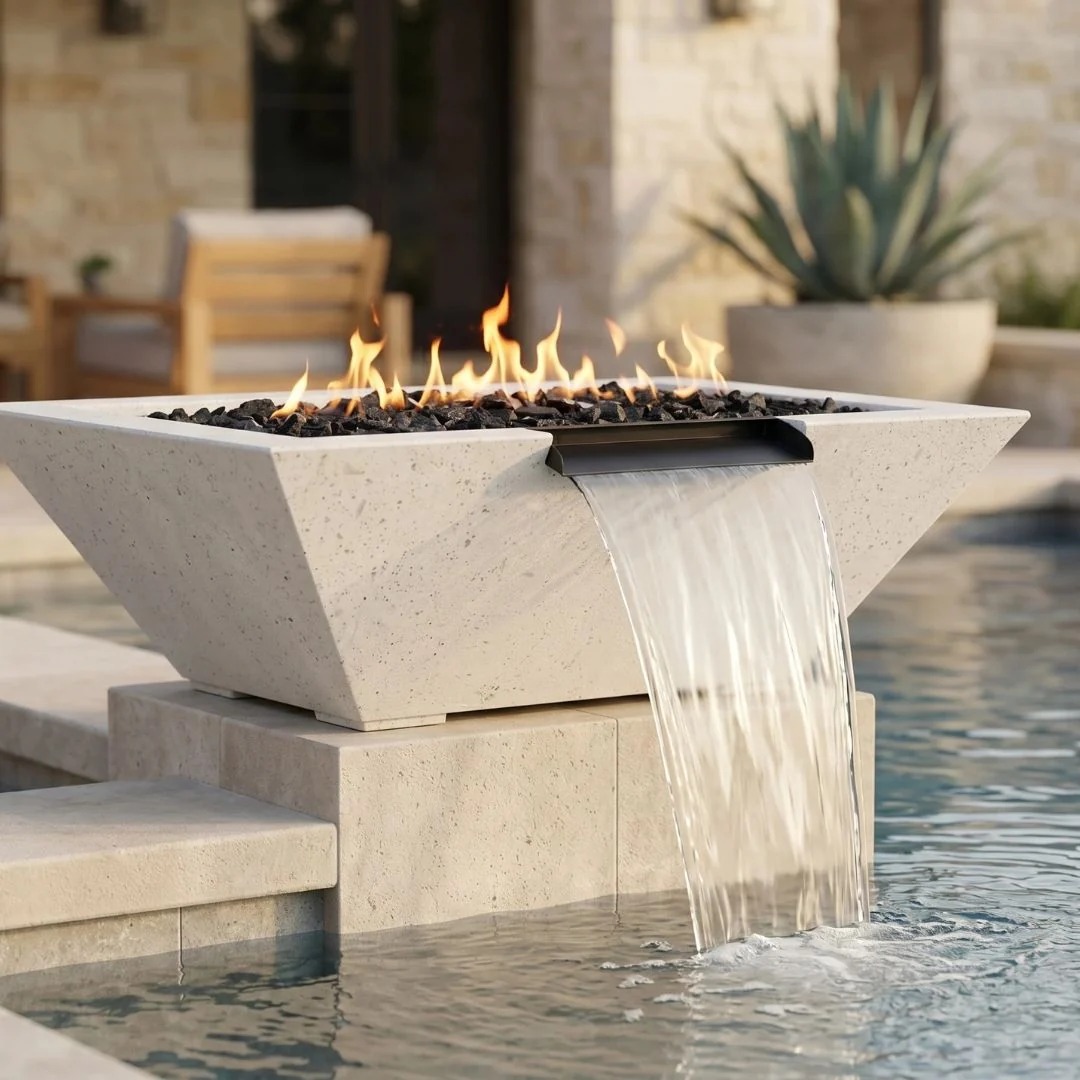
Combination features incorporate fire and water into a shared structure. A common arrangement uses water flowing over the edge of a bowl while a flame is positioned above or within the same feature.
The shape of the structure can vary. Circular forms, square vessels, rectangular structures, and linear designs may be selected according to the architectural style and available space.
Combining the two systems also requires consideration of how water and fire will be separated during operation and how each system will be accessed for maintenance.
Materials And Finishes
Materials influence the appearance and construction of outdoor fire and water features.
Copper, stainless steel, coated metals, concrete-based materials, stone, tile, and other surfaces may be used depending on the design. Material selection can also be affected by exposure to weather, water, heat, cleaning products, and other environmental conditions.
The surrounding hardscape is another consideration. Pool decks, walls, coping, paving materials, landscaping, and outdoor structures can affect the visual relationship between the feature and the rest of the property.
Lighting Considerations
Many outdoor features are viewed during both daytime and nighttime hours. Lighting may therefore be incorporated into the surrounding landscape or feature itself.
Lighting plans can account for visibility from primary areas of the property while also considering glare, reflections, electrical requirements, and access for maintenance.
Water surfaces can reflect nearby lighting, while fire produces its own illumination. The interaction between those sources may influence how the feature appears after sunset.
Installation And Safety
Fire and water features involve technical requirements that should be addressed during the planning stage.
Fire elements may require gas connections, ignition systems, ventilation considerations, and specific clearances. Water features may require pumps, plumbing, drainage, filtration, and electrical components.
Local building requirements, fire regulations, electrical standards, and manufacturer instructions may apply depending on the project and location. Professional design and installation are often used to address these requirements before construction begins.
Considering The Entire Outdoor Space
A fire or water feature is only one part of a larger landscape plan. Its size, location, materials, lighting, and surrounding structures can affect how it relates to the rest of the property.
Designers and property owners may consider the feature in relation to existing architecture, circulation patterns, seating areas, landscaping, pool equipment, and maintenance access.
Scale is another consideration. A feature that occupies a significant portion of a small space may require a different approach from one installed within a larger landscape.
An Area Of Ongoing Design Consideration
Fire and water features involve multiple disciplines, including landscape design, construction, plumbing, electrical work, and safety planning. Their use in outdoor spaces therefore involves more than selecting a visual style.
Understanding the technical requirements alongside the surrounding architecture and landscape can help inform decisions about placement, materials, operation, and maintenance. These considerations apply whether fire and water are used separately or incorporated into a combined feature.
Thomas Hlubin
AquaBlu Mosaics
+1 800-971-1442
email us here
Visit us on social media:
LinkedIn
Instagram
Facebook
YouTube
TikTok
Legal Disclaimer:
EIN Presswire provides this news content “as is” without warranty of any kind. We do not accept any responsibility or liability
for the accuracy, content, images, videos, licenses, completeness, legality, or reliability of the information contained in this
article. If you have any complaints or copyright issues related to this article, kindly contact the author above.

Media gallery