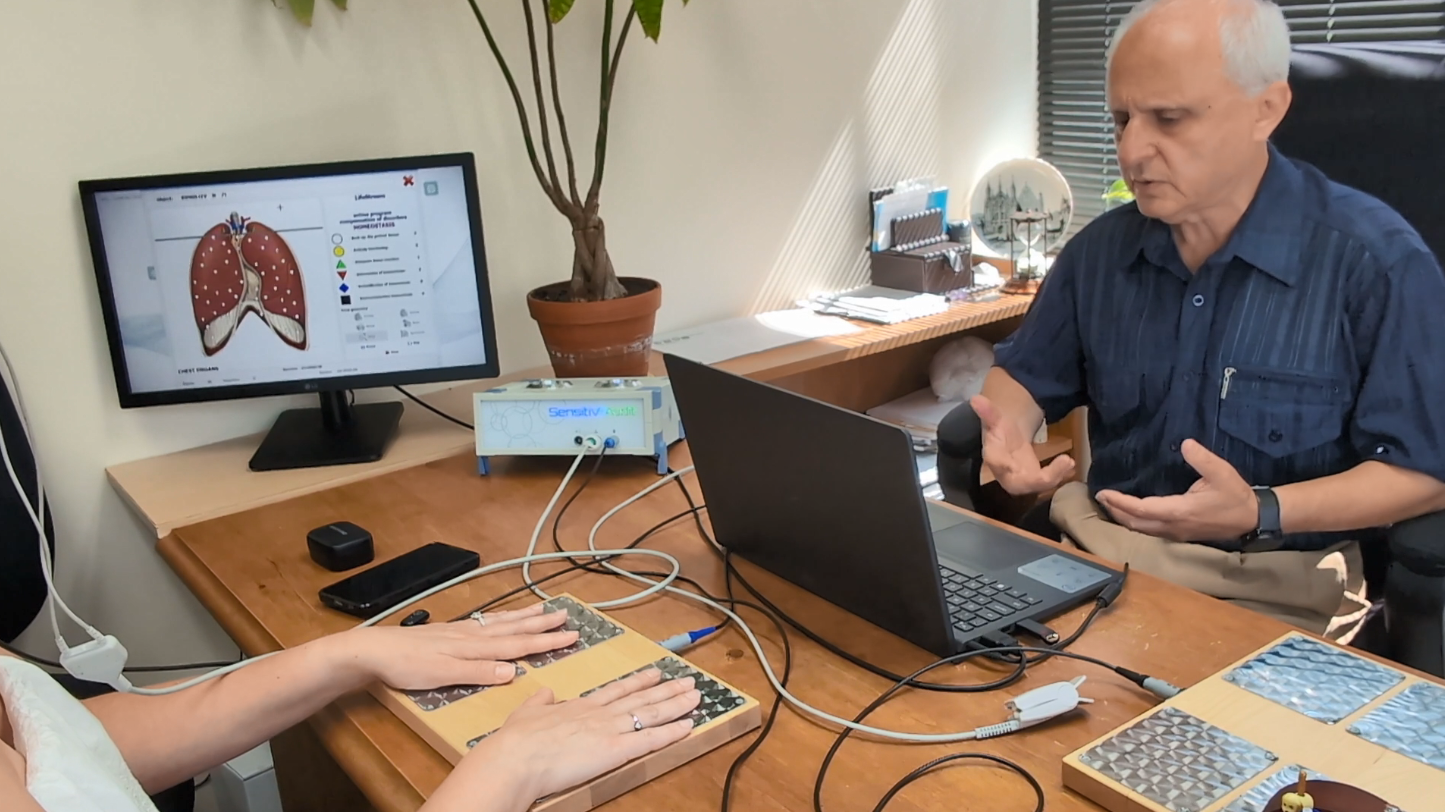
Health Box Clinic in Glenview uses non-invasive wellness screening as a starting point for individualized assessment led by 25 years of professional experience
GLENVIEW, IL, UNITED STATES, September 23, 2026 /EINPresswire.com/ — At Health Box Clinic in Glenview, Sensitiv Audit is not viewed as a machine that replaces professional judgment. In the hands of Dr. Lev Kipnis, D.N., it becomes the starting point for a broader conversation about the body — one guided by more than 25 years of professional experience in rehabilitation, naprapathy, manual methods, nutrition, and individualized wellness care.
There is a category of health concerns that can be particularly frustrating because nothing may appear dramatically wrong, yet a person still does not feel completely well. Energy may gradually decline. Sleep may stop feeling restorative. Digestion can become unpredictable. Certain foods may suddenly seem harder to tolerate. There may be recurring discomfort, sensitivity, physical tension, brain fog, or simply the persistent feeling that several seemingly unrelated issues are occurring at the same time. When each concern is viewed separately, it can be easy to dismiss the larger pattern.
What happens when those individual pieces are considered together? That question sits at the center of the approach used by Dr. Lev Kipnis at Health Box Clinic in Glenview, Illinois, and it helps explain why Sensitiv Audit has become an important part of his work.
A CONVERSATION WITH THE BODY
Modern medicine has developed powerful ways to examine individual parts of the human body. Laboratory tests provide one type of information. Diagnostic imaging provides another. Specialists can focus with remarkable precision on individual organs, systems, and conditions. Yet the person experiencing those symptoms does not live as a collection of isolated organs, test results, or separate complaints. There is one body, one history, one lifestyle, and one biological system in which many influences may interact.
At Health Box Clinic, Dr. Kipnis approaches wellness from this broader perspective. Sensitiv Audit adds another informational layer to that process. The clinic uses the system as a non-invasive computerized wellness-screening tool designed to assess a broad range of functional and wellness-related indicators. The current screening program includes areas associated with the cardiovascular system, spine, central and peripheral nervous systems, toxic burden, allergens, heavy metals, vitamins, minerals, amino acids, food intolerances, fungi, parasites, and other wellness-related factors.
The value, according to the clinic, is not in the volume of data alone, but in what happens after the computerized portion of the screening is complete. Health Box Clinic does not position Sensitiv Audit as a machine capable of answering every medical question or as a substitute for medical diagnosis.
“The technology provides information; the practitioner provides context,” said Dr. Kipnis. “A computer cannot know how a person has felt during the past year, how lifestyle has changed, what treatments have already been attempted, what physical limitations exist, how nutrition has evolved, or which concerns matter most to the individual sitting in front of the practitioner. That is where experience becomes central.”
For patients, this distinction creates tangible value. Instead of receiving a report and being left to interpret it alone, they receive a guided review where findings are placed in the context of their lived experience. Sensitiv Audit is not the conclusion of the assessment. In many ways, it is where the real conversation begins.
MORE THAN 25 YEARS OF EXPERIENCE BEHIND THE TECHNOLOGY
Dr. Kipnis has worked in medicine and wellness for more than 25 years. His professional background includes experience in rehabilitation medicine, naprapathy, manual methods, holistic nutrition, neuromuscular techniques, and additional education related to nutrition and lifestyle. As an Illinois-licensed Doctor of Naprapathy, he has built his professional approach around a principle that sounds simple but can be difficult to achieve in practice: before deciding what a person may need, first try to understand that person as completely as possible.
That philosophy shapes how screening results are used. Sensitiv Audit results are not considered in isolation. A patient’s concerns, history, nutrition, lifestyle, physical condition, and professional assessment may all become part of the discussion. Certain findings may raise questions. Others may identify areas that deserve closer attention. Nutrition and lifestyle patterns may be reviewed. In some circumstances, conventional testing or additional professional evaluation may be appropriate.
“The objective is not simply to hand a patient a computerized report filled with categories and numbers,” Dr. Kipnis said. “The objective is to help the patient understand what information may be meaningful, what deserves further attention, and what the next reasonable step may be.”
For individuals who have already seen multiple providers and have been told that everything looks normal, this approach offers a different kind of value — not a quick answer, but a structured way to organize information that previously felt fragmented.
FROM INFORMATION TO INTERPRETATION
The distinction between information and interpretation has become increasingly important in an era overflowing with health data. Smart watches, mobile applications, home-testing systems, online health platforms, and increasingly sophisticated screening technologies can generate more information about the body than most people have ever had access to before. But more information does not automatically create more understanding. In some cases, it creates more confusion. A report may contain dozens of categories, yet the individual is still left asking the most important question: What does this mean for me?
At Health Box Clinic, the consultation following Sensitiv Audit is therefore a significant part of the process. Instead of leaving a person alone with a complicated set of results, Dr. Kipnis reviews the information within the broader context of that person’s condition and concerns. Nutrition may become part of the discussion. Lifestyle patterns can be examined. Existing symptoms may be compared with information generated during the screening. New questions may emerge that the patient had never previously considered.
This is where the technology changes from an information-generating device into part of a personalized wellness process. For Dr. Kipnis, individualization is not an optional service added after the screening. Individualization is the process itself. The model can be summarized as a combination of Sensitiv Audit, professional interpretation, experience in naprapathy and manual methods, nutritional guidance, and an individualized wellness strategy.
The practical value for patients is clarity. Rather than adding more data points to an already confusing picture, the goal is to reduce complexity by identifying patterns, prioritizing what deserves attention, and translating findings into understandable, actionable language.
WHEN SEPARATE CONCERNS MAY BELONG TO A LARGER STORY
A whole-body perspective encourages both practitioner and patient to look beyond the most obvious complaint. Someone who comes to the clinic because of chronic fatigue may naturally focus only on energy. Yet sleep, nutrition, physical activity, lifestyle, individual sensitivities, and other elements of overall well-being may also become relevant. Someone seeking help because of recurring physical discomfort may need to consider movement, connective tissue, muscular restriction, previous injury, or other factors related to naprapathy and manual methods.
The purpose is not to assume that every symptom is connected to everything else, nor is it to create a complicated explanation when a simple one is sufficient. The purpose is more practical: not to stop asking questions too early.
The human body constantly adapts. Lifestyle influences physical function. Nutrition influences well-being. Movement patterns can compensate for restrictions. Sleep affects recovery. Previous injuries may influence the way a person moves long after the original injury has resolved. Looking at a broader picture creates an opportunity to recognize patterns that might otherwise remain isolated fragments of information.
This perspective is particularly valuable for patients who feel they have been managed as separate symptoms in separate offices. By considering multiple influences together, Health Box Clinic aims to help patients understand why certain issues persist and where an individualized strategy may begin.
TECHNOLOGY WITHOUT EXAGGERATION
The rapid growth of wellness technology has created both opportunity and confusion. Sophisticated equipment can appear impressive, particularly when it produces detailed reports, graphics, and large amounts of data. But responsible use requires clearly defined boundaries.
Health Box Clinic is explicit about those boundaries. Sensitiv Audit should not be viewed as a substitute for laboratory testing, diagnostic imaging, physician diagnosis, emergency medical care, or other conventional forms of medical evaluation when those are needed. The clinic uses the system as part of a complementary wellness-screening process interpreted by an experienced practitioner. This distinction does not weaken the role of the technology. It clarifies it.
No single device, test, symptom, practitioner, or piece of information can always explain the entire human body. Technology becomes more valuable when its role is understood. It can expand observation, identify areas for discussion, generate new questions, and contribute another informational perspective. Professional judgment is still required to determine what deserves attention and what should happen next.
THE HUMAN ELEMENT TECHNOLOGY CANNOT REPLACE
Technology may change dramatically within a few years. Professional judgment develops over decades. That difference helps explain an important part of the Health Box Clinic philosophy.
A sophisticated device can generate information, but it cannot establish the same relationship with a patient that develops through listening, explanation, repeated observation, and years of professional experience. Long-term patients of Dr. Kipnis have frequently described qualities such as thoroughness, individualized attention, clear explanations, continued guidance, and the sense that he wants to understand the individual rather than simply move through another appointment.
Those qualities are difficult to quantify, but they are central to personalized care. A device may initially attract attention. A report may provide useful information. But trust is created between people. The practical value of screening ultimately depends on whether the information can be interpreted responsibly, explained clearly, and placed within an appropriate personal context.
SOMETIMES THE RIGHT QUESTION IS MORE IMPORTANT THAN A QUICK ANSWER
Medicine and wellness have always advanced through better ways of observing and understanding the human body. But information alone has never been enough. Someone still has to ask the right questions. Someone has to recognize possible connections. Someone has to listen carefully to the person rather than only looking at the screen. Someone has to understand the limitations of the available information. And someone has to translate complex findings into language that the individual can actually understand and use.
This is the role Dr. Kipnis brings to Sensitiv Audit. The technology gives him another way to look at the condition of the body; more than 25 years of professional experience help him determine what deserves attention next. Perhaps the simplest description remains the most accurate: Sensitiv Audit is not merely a scan. It is the beginning of a conversation with your body.
DR. OLGA ARBITMAN: ADDING MOVEMENT TO THE LARGER PICTURE
The broader philosophy at Health Box Clinic extends naturally beyond computerized wellness screening. Working alongside Dr. Kipnis, Dr. Olga Arbitman, D.N., brings another professional perspective grounded in Exercise Physiology, therapeutic exercise, rehabilitation, manual therapy, naprapathy, and modern therapeutic modalities. Her professional foundation in Exercise Physiology dates to 1994, and more than 25 years of work involving movement and rehabilitation have shaped the way she evaluates patients today.
For Dr. Arbitman, one of the most important sources of information is movement itself. A person sitting or lying still during an examination may appear relatively unrestricted, yet an entirely different picture may emerge when that person begins to walk, bend, rotate, reach, lift an arm, or shift weight. Movement can reveal compensation, asymmetry, guarding, restricted mobility, and functional patterns that are difficult to recognize while the body is at rest.
“Rest can hide what movement reveals,” Dr. Arbitman said. “The body heals when it moves — not when it sits still. When we observe how someone moves, we often understand why discomfort persists.”
Her approach therefore complements Dr. Kipnis’s broader whole-body perspective. Sensitiv Audit may provide one informational layer; movement and physical function may provide another.
Dr. Arbitman’s work also incorporates hands-on evaluation and manual therapy, with technologies such as Shockwave Therapy and Pulsed Electromagnetic Field (PEMF) Therapy available when appropriate within an individualized strategy. These modalities are not treated as isolated procedures or universal solutions. Their value depends on why they are being used, what the practitioner has observed, and what the individual patient requires.
FROM SCREENING TO MOVEMENT, FROM INFORMATION TO FUNCTION
The clinic is not defined by one machine or one therapy. Sensitiv Audit, naprapathy, manual assessment, movement analysis, rehabilitation, Shockwave Therapy, PEMF Therapy, nutrition, and professional consultation are individual tools within a much larger clinical environment. Integration does not mean that every patient receives every service. Meaningful integration means having enough professional perspective to determine which tools are actually relevant to the individual.
LOOKING AT THE WHOLE PICTURE
There is no single universal pathway for understanding every person’s health, physical function, or wellness concerns. People arrive with different histories, lifestyles, nutritional patterns, movement habits, previous injuries, expectations, and questions. That reality is exactly why individualized assessment matters.
For this reason, the Health Box Clinic story is being developed through the MyTSV Digital Business Assets™ system, which structures verified professional information into interconnected digital assets rather than treating every article, video, or profile as a separate piece of advertising. For Health Box Clinic, the objective is to create a durable digital body of information explaining who Dr. Lev Kipnis is, what more than 25 years of experience bring to the screening process, how Sensitiv Audit is used responsibly, how Dr. Olga Arbitman expands the clinic’s perspective through movement and rehabilitation, and how those elements fit together.
An advertisement can describe a service. A Digital Business Asset can preserve and explain professional value. MyTSV.com builds Digital Business Assets™ — it turns verified professional expertise into lasting digital assets across web, search, and media, not just temporary ads.
Partners by category:
Healthcare: Health Box Clinic — https://healthboxclinic.com
Wellness Education: Five Step Sleep Tantra — https://fivestepsleeptantra.com
Legal / Family Law: Resolving Divorces — https://resolvingdivorces.com
ABOUT DR. LEV KIPNIS AND HEALTH BOX CLINIC
Dr. Lev Kipnis, D.N., is an Illinois-licensed Doctor of Naprapathy practicing at Health Box Clinic in Glenview, Illinois. He has more than 25 years of professional experience in medicine and wellness, including rehabilitation medicine, naprapathy, manual therapy, holistic nutrition, neuromuscular techniques, and lifestyle-focused approaches. Health Box Clinic provides individualized wellness and rehabilitation services including naprapathy and manual therapy, Sensitiv Audit full-body wellness screening, nutritional counseling, Shockwave Therapy, neuromuscular rehabilitation, and PEMF Therapy.
Health Box Clinic
3633 W. Lake Avenue, Suite 307, Glenview, Illinois 60026
Phone: 224-875-9968
Email: info@healthboxclinic.com
Website: https://healthboxclinic.com
Eugene Kolkevich
MYTSV
+1 6302977501
info@mytsv.com
Visit us on social media:
LinkedIn
Bluesky
Instagram
Facebook
YouTube
TikTok
X
Legal Disclaimer:
EIN Presswire provides this news content “as is” without warranty of any kind. We do not accept any responsibility or liability
for the accuracy, content, images, videos, licenses, completeness, legality, or reliability of the information contained in this
article. If you have any complaints or copyright issues related to this article, kindly contact the author above.

Media gallery